
Words of Time | An Exclusive Interview with Canadian Senator Victor Oh
- Uni-S Media

- 2025年4月1日
- 讀畢需時 3 分鐘
已更新:2025年9月6日
From Cultural Identity to National Duty: A Voice for Understanding and Hope in a Multicultural Dialogue

In this edition of Words of Time, we sit down with Senator Victor Oh — Canada’s first male Chinese Canadian appointed to the Upper House.
Over the past decade, he has walked the halls of Parliament with quiet resolve, using the tools of legislation to shape a legacy where culture, governance, and the passage of time intersect.

The Work of a Senator: A Vessel of Time That Sets Sail at 8 A.M.
When Senator Oh describes his daily routine in the Senate, it sounds less like a job and more like a disciplined rhythm—meticulously structured and rigorously paced.
“The work of a senator is quite demanding. Each of us sits on multiple committees. At my busiest, I served on nearly five. Meetings usually start at 8 a.m. and run until 11 or 12. Then the Senate convenes at 2 p.m.—and on busy days, we might continue until 11 p.m. or even midnight.”
With a hint of humor, he adds:
“It feels like being back in school—checking in, reporting daily.”
Behind the lighthearted remark lies a deep respect for institutional structure. For Senator Oh, public service is not only about policymaking; it’s about the everyday commitment, hour by hour, to uphold the mechanics of democracy.

“If You Don’t Speak, the Moment Passes.”
“In the Senate, I’m one of the few visible minorities. But I have my rights,” Senator Oh affirms.
He doesn’t shy away from acknowledging the realities that minority representatives face in government. But rather than dwelling on obstacles, he focuses on action.
“Sometimes, if you don’t speak, the opportunity passes. You have to raise your hand—in that minute, even in that half minute—you must be willing to speak.”
His tone is calm but resolute. For him, representation is more than symbolic. It’s an active presence in the room, a willingness to participate, to ask questions, to push for clarity.
Throughout his tenure, Senator Oh has supported policy changes that have had real-life impact. He helped amend legislation to allow minors under 18 to apply for Canadian citizenship independently—removing restrictions based on their parents’ status. He also advocated for reforms to the Super Visa program:
“Now they can stay for five years at a time, without having to travel back and forth. These elders support their families, especially younger immigrants trying to start businesses. That’s an economic contribution in itself.”
These initiatives may seem administrative, but to thousands of immigrant families, they represent stability, opportunity, and dignity.

Representation as Quiet Responsibility
For Senator Oh, identity is more than heritage—it’s responsibility. It means standing up, not just for his own community, but for the broader ideal of an inclusive and equitable Canada.
“When I attend community events, people are happy to see me. We talk, we connect, and most importantly—I show my support.”
His presence is not ceremonial—it’s connective. Through conversation and advocacy, he threads his personal rhythm into the fabric of public life. Over the past ten years, his work has created pathways—not only within policy, but within people’s lives.
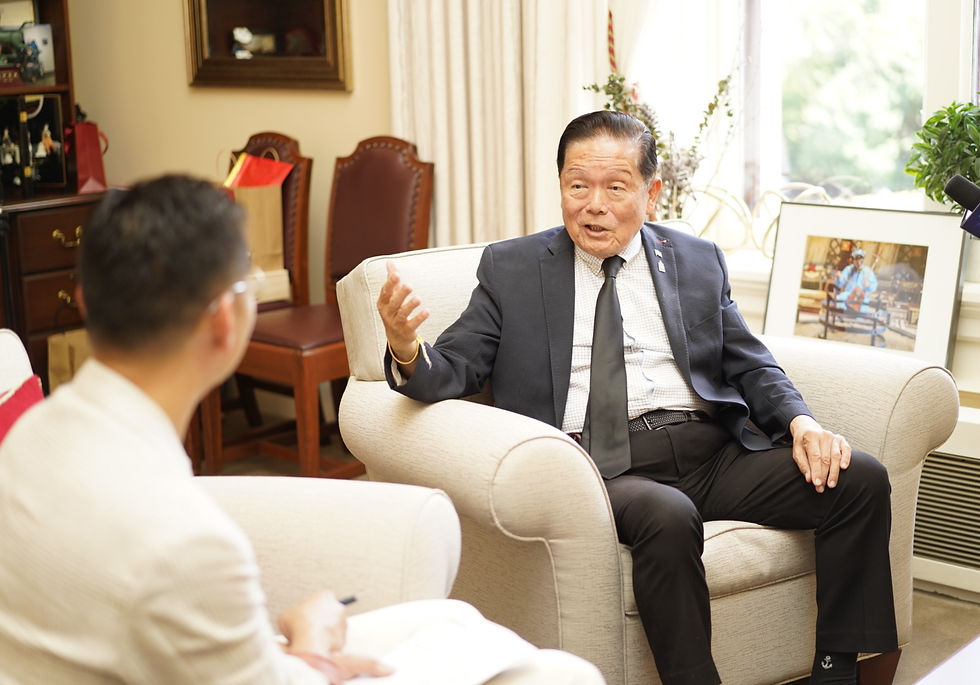
“Culture is a deep, enduring current of time.”
Through his service, Senator Victor Oh has become part of that current. His decade-long commitment has ensured that Chinese Canadians—and many others—have a seat at the table, a voice in the system, and a future shaped in their image.
Editor-in-Chief: Doris Shangguan
Until next time — in time.