
Exclusive Interview with Sawsan A. Habbal, Honorary Consul of Syria in British Columbia | Words of Time

已更新:2025年9月6日
At the intersection of humanitarian need and diplomatic complexity, some individuals continue to serve quietly, driven not by authority, but by a sense of duty.

In this edition of Words of Time, we speak with Sawsan Habbo, a Canadian of Syrian origin and the Honorary Consul for Syria in British Columbia. At a time when official diplomatic ties between Canada and Syria have been suspended, Ms. Habbo remains one of the few individuals in North America still offering support to the Syrian community through legal and consular assistance.
“My name is Sawsan — it means ‘flower’ in Arabic,” she says, seated warmly during our conversation in Vancouver.
Born in Damascus, Ms. Habbo left Syria at the age of 18 to study in the UK. She later immigrated to Canada in 1989 to pursue legal studies, eventually earning degrees from McGill University and the University of British Columbia. Though she initially planned to return home after graduation, she decided to stay, later opening a law practice in British Columbia. In 2009, she was appointed Honorary Consul for Syria — a role recognized by both the Syrian and Canadian governments at the time.
“As an honorary consul, I am not an official diplomat. According to international law, my authority is very limited — I cannot issue passports or register births and deaths. I can only process documents through stamping,” she explains.
“This work is for the people.”
In 2012, Canada formally cut diplomatic ties with Syria, closing the embassy in Ottawa and later the consular office in Montreal — leaving only the honorary consulate in Vancouver in operation.
For Ms. Habbal, the absence of political diplomacy must not come at the expense of humanitarian dignity.
“There should be at least a consular section reopened — not for politics, but for the people,” she stresses.
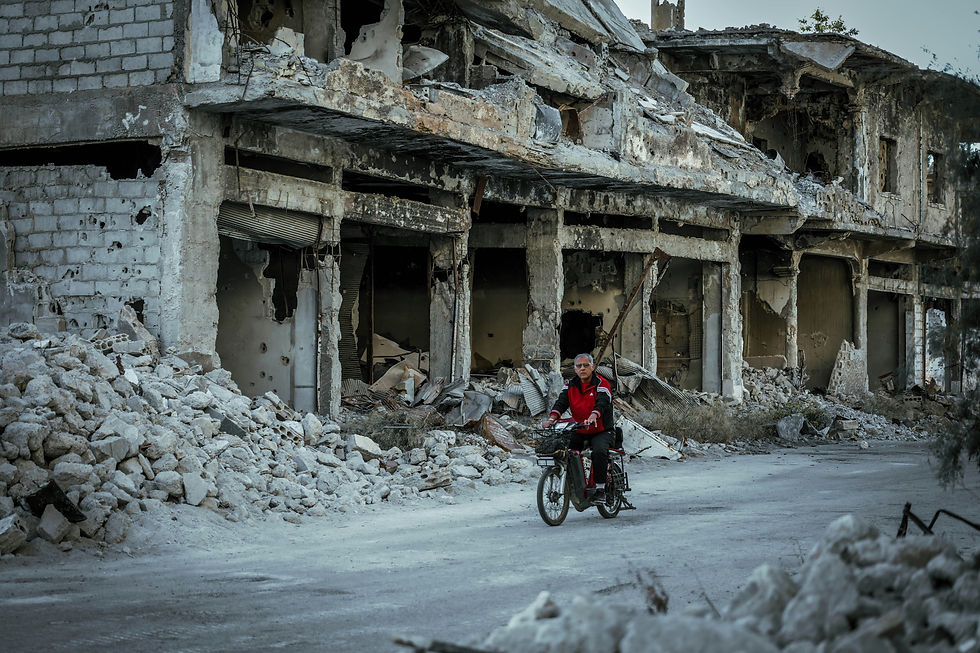
Her call comes in the wake of a devastating earthquake that struck Turkey and Syria in early 2023. The disaster, she says, affected not only Syria’s northern border but also its central and coastal regions, including Homs, Hama, and Latakia.
“They say it’s just the north, but the destruction extended far beyond. We’ve lost at least 10,000 to 15,000 lives in Syria alone. Some of the victims’ bodies are still buried. We simply don’t have the equipment to retrieve them.”
A Call for Global Solidarity
Ms. Habbal urges international communities — including Canadians and the Chinese diaspora — to take humanitarian action.
“The Chinese community has always been generous. If you wish to donate, please call the Canadian Red Cross at 1-800-418-1111, and specify your donation is for Syrian earthquake victims.”
She also mentioned that local churches and mosques in Vancouver have already raised thousands in aid, much of which has been sent through organizations based in Montreal.
“The Syrian community is underrepresented and underserved,” she notes. “The need is real. The service is not about politics — it’s about people.”
“Syrians have been hit twice — by war and by disaster.”
As she speaks, her tone is measured, her message resolute: the international community must rise above politics to respond to human suffering.
“Canada has always been the Switzerland of North America. We hope it continues to be a country that stands for dignity and decency — wherever people are.”
From Personal Commitment to Cross-Border Advocacy
“This isn’t just about service. It’s about a promise — to those who need someone to stand with them.”
In the passage of time, certain voices echo louder — not through volume, but through their persistence. Sawsan Habbal is one of those voices, walking the line between fracture and hope.
Editor-in-Chief: Doris Shangguan
Until next time — in time.